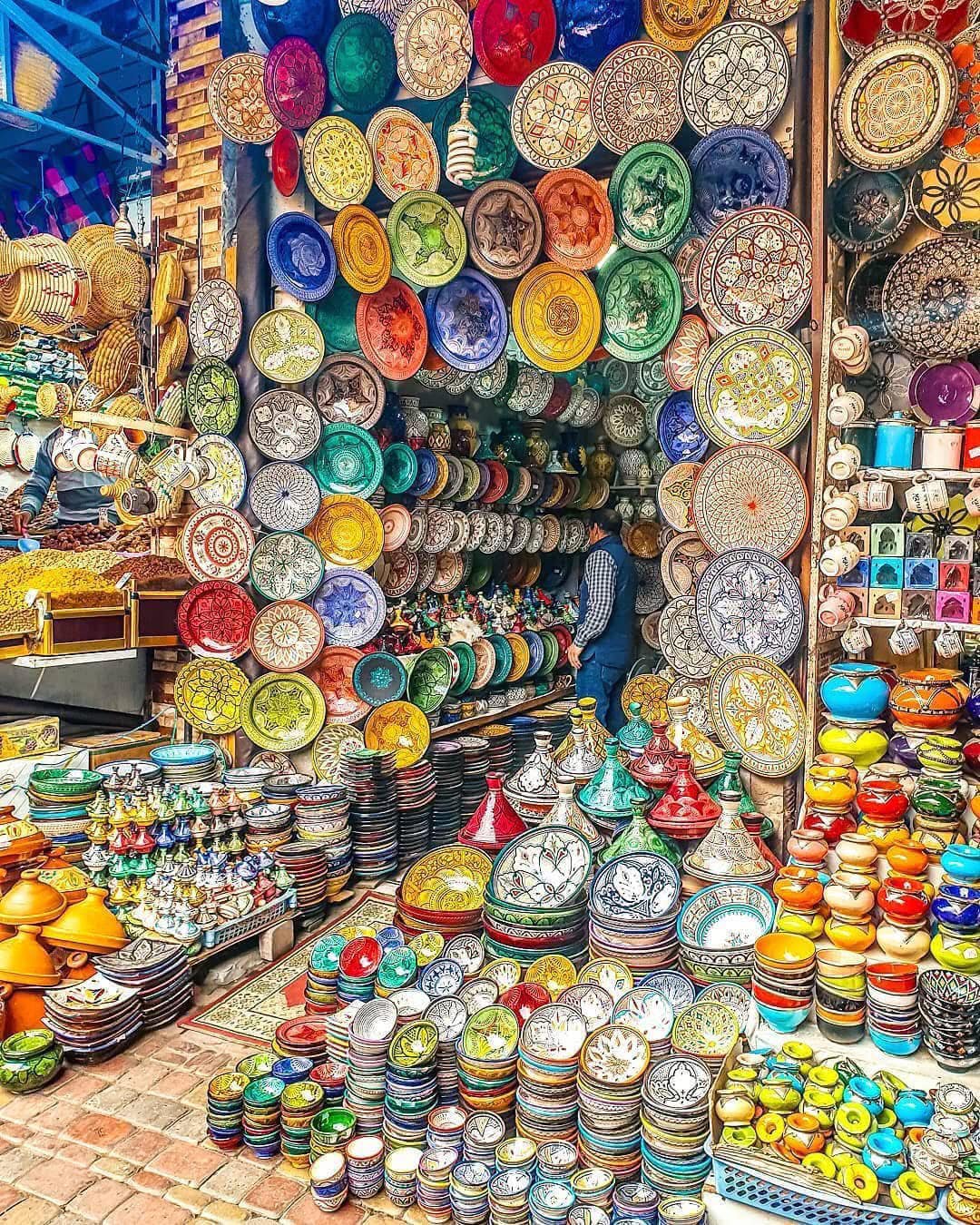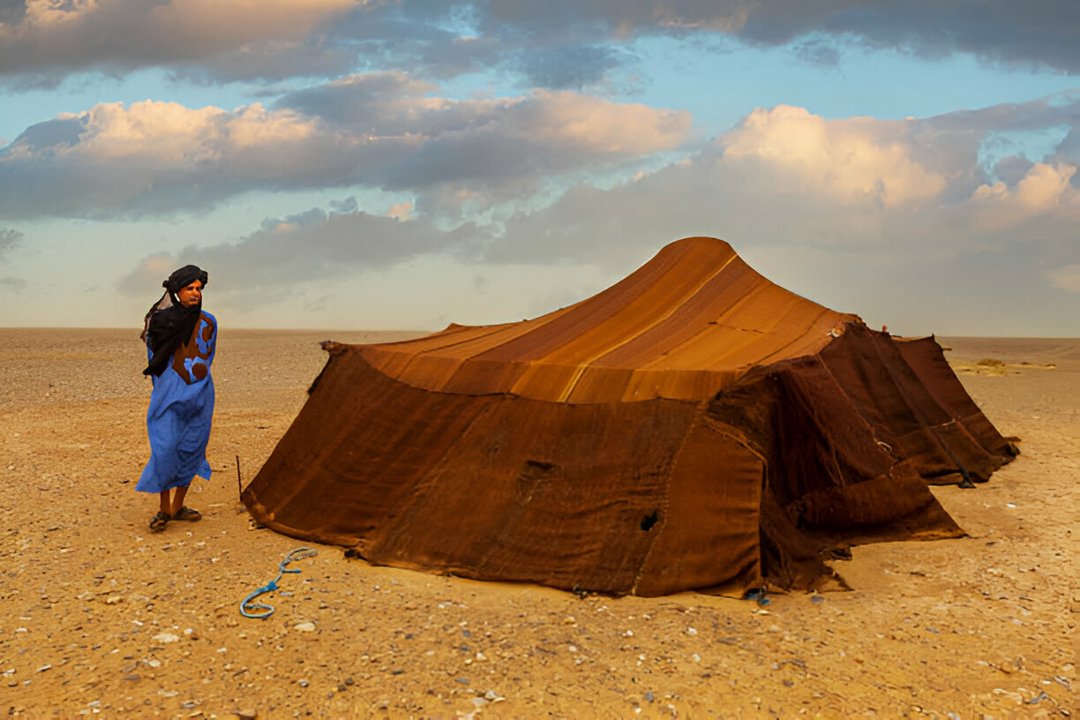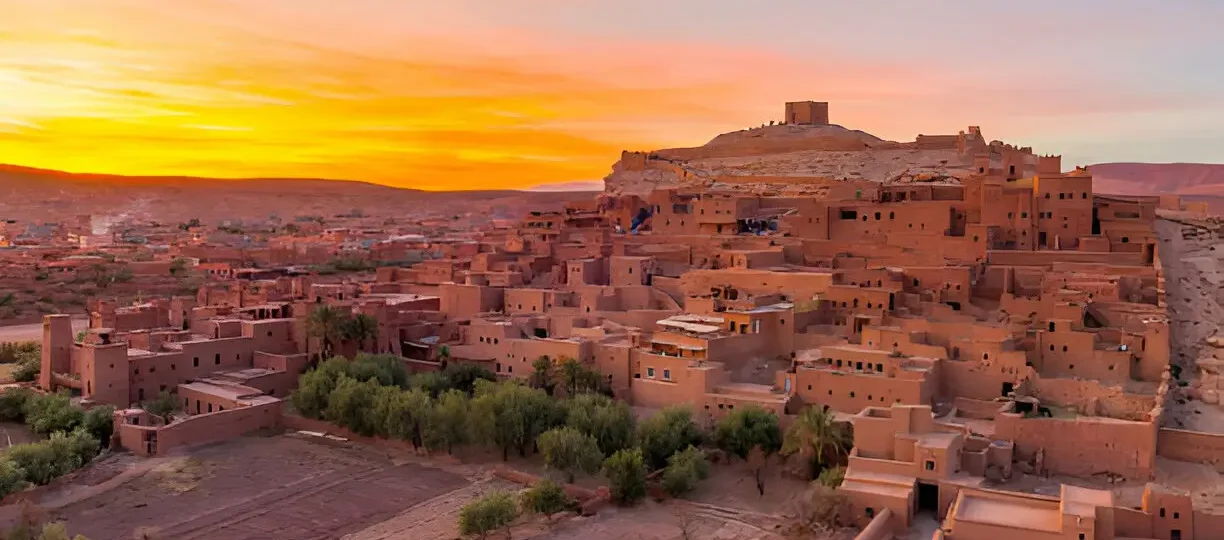
Marrakech is one of the most vibrant cities in North Africa, and it serves as the most popular gateway to the Sahara Desert in Morocco. From its ancient medina to the sweeping golden dunes of Erg Chebbi, a desert tour from Marrakech offers one of the most breathtaking travel experiences on earth. Whether you choose a quick one-day escape or an immersive multi-day journey through kasbahs, gorges, and star-filled skies, the route south from Marrakech is nothing short of spectacular.
This guide covers everything you need to know before booking your desert tour from Marrakech — from tour types, costs, and the best time to go, to what to pack, what to expect, and which stops to look forward to along the way. By the end, you will have all the information you need to plan the perfect desert adventure.
What Is a Desert Tour from Marrakech?
A desert tour from Marrakech is an organised excursion that takes travellers from the city of Marrakech southward through the Atlas Mountains, across ancient caravan routes, and into the Sahara Desert — most commonly to the Erg Chebbi dunes near the village of Merzouga. These tours can last anywhere from one day to two weeks, and they typically include transport, accommodation, a camel trek, and guided visits to key cultural and natural landmarks along the route.
The experience combines road travel through some of Morocco’s most dramatic landscapes with overnight stays in desert camps, visits to UNESCO-listed kasbahs, and the unforgettable sight of the sun rising or setting over towering sand dunes. Tours are available as private, semi-private, or group options, making them accessible to a wide range of budgets and travel styles.
How Far Is the Sahara Desert from Marrakech?
The Sahara Desert — specifically the Erg Chebbi dunes near Merzouga — is approximately 560 kilometres (350 miles) from Marrakech. By road, this journey takes around 9 to 10 hours of driving each way, which is why most travellers opt for a minimum of three days to make the trip worthwhile.
The standard route follows the N9 highway over the Tizi n’Tichka mountain pass in the High Atlas, descends into the Draa Valley, passes through Ouarzazate, and then continues east through the Valley of Roses and the Dadès and Todra gorges before reaching the dunes. This route is one of the most scenically rewarding drives in all of Africa.
What Are the Types of Desert Tours from Marrakech?
Desert tours from Marrakech come in several formats, each suited to different budgets, timeframes, and travel preferences. Below is an overview of the main types available.
1. One-Day Desert Tour from Marrakech
A one-day desert tour from Marrakech covers the most iconic sights accessible within a single day’s drive. These tours typically include a stop at Ait Benhaddou, a visit to Ouarzazate, and a drive through the scenic landscapes of the Draa Valley. Because the Sahara dunes at Merzouga are too far for a true one-day return trip, these tours usually visit smaller desert areas such as the Agafay Desert or the Draa Valley’s sandy stretches rather than the full Erg Chebbi experience.
A one-day tour is best for travellers with limited time who want a taste of Morocco’s desert scenery without committing to an overnight stay. Departure is typically early in the morning, and return to Marrakech is late evening.
2. Two-Day Desert Tour from Marrakech
A two-day tour from Marrakech adds an overnight stay and allows for a more comfortable pace. Most two-day itineraries reach the dunes of Merzouga, include a sunset camel trek, and offer either a night in a luxury desert camp or a local guesthouse. The return journey on day two passes through different scenic routes, offering new landscapes on the way back.
This option works well for travellers who want the full Sahara dune experience but have tight schedules. It is physically demanding due to long driving hours, so travellers should be prepared for an intensive but rewarding two days.
3. Three-Day Desert Tour from Marrakech
The 3 day desert tour from Marrakech is by far the most popular option among visitors to Marrakech. It strikes the ideal balance between depth of experience and time investment. A typical three-day itinerary includes:
- Day 1: Marrakech → Tizi n’Tichka Pass → Ait Benhaddou → Ouarzazate → Rose Valley → Dadès Gorge (overnight)
- Day 2: Dadès Gorge → Todra Gorge → Erfoud → Merzouga → Camel trek at sunset → Overnight desert camp
- Day 3: Sunrise over the dunes → Merzouga → Ouarzazate → Marrakech (arrival evening)
This itinerary allows travellers to experience the best of Morocco’s deep south — dramatic mountain scenery, ancient kasbahs, impressive gorges, and the iconic Sahara dunes — all within a manageable three-day window.
4. Four-Day and Longer Desert Tours
Four-day and longer tours offer a deeper exploration of southern Morocco and can include the option of a circular route via Fès, allowing travellers to end their journey in a different city than they started. Additional destinations on longer tours may include the oasis town of Tinghir, the Ziz Valley, the town of Rissani (birthplace of the Alaouite dynasty), and the blue-tinted town of Chefchaouen on extended northern loops.
Longer tours are ideal for first-time visitors to Morocco who want a comprehensive introduction to the country’s diversity, or for travellers who have more time and prefer a relaxed, unhurried pace.
5. Private Desert Tours from Marrakech
A private desert tour from Marrakech offers a fully customised experience with a dedicated driver-guide and a vehicle for your group only. Itineraries can be tailored to your interests — whether that means lingering longer at Ait Benhaddou, adding a cooking class in a Berber village, or choosing a specific luxury camp. Private tours cost more than group tours, typically 20–40% higher per person depending on group size, but they provide far greater flexibility and a more personal experience.
6. Group Desert Tours from Marrakech
Group tours are the most budget-friendly option and typically operate with 6 to 12 passengers sharing a minivan. They follow fixed itineraries with set departure times and are an excellent choice for solo travellers who want to meet other people along the way. The trade-off is less flexibility — stops and pace are determined by the group, and camp accommodation may be shared.
What Is the Best Time for a Desert Tour from Marrakech?
The best time for a desert tour from Marrakech is between October and April, when temperatures in the Sahara are comfortable and pleasant. During these months, daytime temperatures in the desert range from 18°C to 28°C (64°F to 82°F), and nights can be cool to cold, particularly in December and January when temperatures can drop to near 0°C.
Spring (March–May) and autumn (October–November) are considered the peak seasons, offering warm days, mild nights, and clear skies perfect for stargazing. These months are also the busiest, so booking in advance is essential.
Summer (June–September) should generally be avoided for desert tours. Daytime temperatures in the Sahara regularly exceed 45°C (113°F), making outdoor activities such as camel riding extremely uncomfortable and potentially dangerous. The journey south from Marrakech is also significantly hotter in summer.
Winter (December–February) can be an excellent time to visit if you enjoy solitude and lower prices. Days are warm and sunny while nights are cold — bringing warm layers for the camp is essential. Snow occasionally falls on the Tizi n’Tichka pass, which can affect road conditions.
What to Expect on a Desert Tour from Marrakech?
A desert tour from Marrakech is as much about the journey as the destination. The road south passes through some of the most diverse and visually striking landscapes in all of Africa — from the snow-capped peaks of the High Atlas to the volcanic rock of the Jebel Sahro, the lush palmeries of the Draa Valley, and finally the sweeping golden dunes of Erg Chebbi.
Most tours include a combination of the following experiences:
- Early morning departure from Marrakech by private 4×4 or minivan
- Scenic mountain crossing through the Tizi n’Tichka pass (2,260m altitude)
- Visit to Ait Benhaddou and Ouarzazate
- Drive through the Dadès and Todra gorges
- Arrival at Merzouga in time for a sunset camel trek
- Overnight stay in a traditional nomadic-style desert camp
- Dinner and music around a campfire
- Sunrise over the dunes the following morning
- Return journey to Marrakech via alternative scenic routes
Camel Ride in the Sahara — What Is It Like?
A camel trek at sunset into the Erg Chebbi dunes is the defining highlight of any desert tour from Marrakech. Camels — more precisely, dromedaries — carry riders in single file into the dunes as the sky shifts from blue to deep orange and gold. The experience typically lasts between 45 minutes and 1.5 hours depending on the camp’s location.
Camel riding is gentle but requires some balance — the animal’s gait is a slow, rocking motion. Riders sit on a padded saddle above the hump and are guided by a Berber cameleer. Wearing loose, comfortable trousers is recommended, and closed shoes are preferable to sandals. For those with back problems, many camps now offer the option of riding a 4×4 directly to the camp instead.
Overnight Desert Camp — What Should You Know?
Desert camps range from basic tented accommodation to luxury glamping experiences with private en-suite bathrooms, king beds, and heated tents. Standard camps include a sleeping tent with mattresses and blankets, shared toilet facilities, a communal dinner of tagine or couscous, and live Berber music around the campfire.
Luxury camps offer private tents with proper beds, electricity, hot showers, and à la carte dining. The price difference between standard and luxury camps is significant — from around €20 per person at the lower end to €150–€300 per person at the top end. When booking your tour, always clarify the category of camp included.
One of the greatest rewards of an overnight camp is the night sky. Far from any city lights, the Sahara offers some of the best stargazing conditions in the world. On a clear night, the Milky Way is clearly visible to the naked eye.
How Much Does a Desert Tour from Marrakech Cost?
The cost of a desert tour from Marrakech varies widely depending on tour duration, group type, accommodation standard, and what is included. Below are approximate price ranges:
| Tour Type | Group (per person) | Private (per person) |
| 1-Day Tour | €30–€60 | €80–€150 |
| 2-Day Tour | €80–€130 | €150–€280 |
| 3-Day Tour | €120–€200 | €250–€450 |
| 4-Day Tour | €160–€260 | €320–€600 |
What is typically included: Transport, driver-guide, fuel, accommodation (hotel or camp), camel trek, breakfast, dinner on desert nights.
What is typically excluded: Lunches, entrance fees (Ait Benhaddou costs approximately €2–3 per person), personal travel insurance, tips for the guide and cameleer, and any additional activities.
Tips for the driver-guide are expected and greatly appreciated. A standard tip for a three-day private tour is €10–€20 per person per day.
Is a Desert Tour from Marrakech Worth It?
Yes — a desert tour from Marrakech is widely regarded as one of the most memorable travel experiences in the world. The combination of Morocco’s extraordinary cultural heritage, dramatic natural landscapes, and the raw, otherworldly beauty of the Sahara creates an experience that is genuinely difficult to replicate anywhere else on earth.
For travellers who will enjoy it most: Those who appreciate slow travel, vast open landscapes, cultural encounters with Berber communities, photography, and night skies. Families, couples, solo travellers, and adventure seekers all find something deeply rewarding in the journey.
Potential drawbacks to consider: The long driving hours (particularly on a 2 or 3-day tour) can be tiring. Some travellers find the more touristy camps near Merzouga have lost some authenticity. Booking through a reputable operator is essential to avoid overpriced or misleading tours.
Overall, the overwhelming consensus from travellers is that the desert tour is the highlight of their entire Morocco trip.
What to Pack for a Desert Tour from Marrakech?
Packing correctly for a desert tour makes a significant difference to your comfort, especially given the temperature extremes between day and night.
Clothing essentials:
- Lightweight, breathable layers for daytime
- A warm fleece or jacket for cold desert nights (essential October–March)
- Long trousers and long-sleeved shirts (protection from sun and cultural respect)
- A scarf or shemagh (for sand and sun protection, and widely sold in Merzouga)
- Comfortable closed-toe shoes for walking in dunes
Sun and health:
- High-SPF sunscreen (50+) — the desert sun is intense
- Sunglasses with UV protection
- Lip balm and moisturiser (air is very dry)
- Any personal medications and a basic first-aid kit
- Rehydration sachets
Practical items:
- Cash in Moroccan dirhams (ATMs are scarce south of Ouarzazate)
- A power bank for your phone
- Camera or phone with extra memory cards
- Earplugs (for camp nights that include late music)
- Small torch or headlamp
What to Wear in the Desert?
Both for comfort and out of respect for local culture, modest clothing is recommended throughout the desert tour. Loose-fitting trousers are far more practical than shorts, particularly for camel riding. Women do not need to cover their hair, but having a light scarf is useful for sun and sand protection. Avoid wearing revealing or very tight clothing, especially in small Berber villages along the route.
How to Book a Desert Tour from Marrakech?
There are three main ways to book a desert tour from Marrakech:
1. Book online in advance — This is the most reliable method. Numerous reputable tour operators offer desert tours through their own websites or through platforms such as Viator, GetYourGuide, or Airbnb Experiences. Reading recent reviews is essential. Booking in advance guarantees your preferred dates and allows you to compare inclusions carefully.
2. Book through your riad or hotel — Many riads in Marrakech’s medina have in-house travel desks or partnerships with local tour companies. This can be convenient, but prices are sometimes marked up. Always ask to see the vehicle and confirm camp category before paying.
3. Book directly in the Djemaa el-Fna area — Street touts and travel agency shops around the main square offer tours at apparently low prices. Exercise caution — some use misleading descriptions of camp quality, and driver changes mid-route are common. If booking this way, insist on a written confirmation of all inclusions.
Tips to avoid scams:
- Always get a written itinerary before paying
- Confirm the exact camp name and category
- Check if the driver-guide speaks your language
- Pay a deposit only; never the full amount in advance
- Read Google or TripAdvisor reviews from the past 3 months
Should You Book a Desert Tour in Advance?
Yes — booking at least 2 to 4 weeks in advance is strongly recommended, particularly if travelling between October and April. The most reputable operators and best-quality desert camps sell out during peak season, sometimes months ahead. Last-minute availability exists but typically means less desirable camps or group tours with fixed departures. If you are travelling as a couple or a family and want a private tour, early booking also gives you better vehicle and guide options.
What Are the Main Stops on a Desert Tour from Marrakech?
The route from Marrakech to the Sahara passes through a series of remarkable destinations, each with its own distinct character and history.
1. Ait Benhaddou
Ait Benhaddou is a UNESCO World Heritage Site and one of the best-preserved earthen kasbahs in Morocco. Located 30 kilometres north of Ouarzazate, this ancient fortified village has served as a filming location for major productions including Gladiator, Game of Thrones, and Lawrence of Arabia. A visit typically involves a 45-minute walk through the lower village and up to the granary at the summit, from which the views across the Ounila River valley are exceptional. Entry costs around 10–15 MAD per person.
2. Ouarzazate
Known as the “gateway to the desert” and sometimes called Morocco’s Hollywood, Ouarzazate is the largest city on the southern route and makes an excellent lunch stop or overnight base. Key sights include the Atlas Film Studios — the largest in the world — and the 17th-century Kasbah Taourirt. The city has a wide range of accommodation options and good restaurants, making it a comfortable midpoint on longer tours.
3. Dadès Gorge
The Dadès Gorge is a striking canyon carved by the Dadès River through dramatic ochre and red rock formations. The gorge is best known for its sinuous road that winds up through the canyon walls, and for its unique rock formations — locally nicknamed the “Monkey Fingers” or “Rock of the Hands.” The area is also part of the famous Road of 1,000 Kasbahs. Many three-day tours include an overnight stay here on day one.
4. Todra Gorge
The Todra Gorge is one of Morocco’s most dramatic natural spectacles — a narrow canyon with walls rising up to 300 metres on either side of a shallow river. The sheer scale of the rock faces is awe-inspiring, and the canyon is popular with rock climbers from around the world. The walk through the narrowest section of the gorge takes approximately 20 to 30 minutes and is accessible to all fitness levels. The light is most beautiful in the late morning when sunlight filters directly between the canyon walls.
5. Merzouga and Erg Chebbi Dunes
Merzouga is a small Berber village at the edge of the Erg Chebbi dune field — the most spectacular dune landscape in Morocco and one of the most beautiful in the entire Sahara. The dunes rise to over 150 metres and stretch for approximately 22 kilometres from north to south. The best experience is arriving in the late afternoon for the camel trek and sunset, then spending the night in the desert before watching the sunrise paint the dunes in shades of rose, amber, and gold. Activities available in Merzouga include sandboarding, quad biking, 4×4 dune rides, and visits to local nomadic families.
Tips for Your Desert Tour from Marrakech
- Start early on day one. Departing Marrakech by 07:00 ensures you reach Ait Benhaddou before the tour buses arrive and makes for a more relaxed day overall.
- Bring more cash than you think you need. ATMs are unavailable in most desert towns. Withdraw Moroccan dirhams in Marrakech or Ouarzazate.
- Tip your guide. Driver-guides work long hours and play a central role in your experience. A tip of €10–€15 per day for a private tour is appropriate and appreciated.
- Protect your camera from sand. The dunes produce fine airborne sand. Keep your camera in a sealed bag when not shooting and clean the lens frequently.
- Stay hydrated. The dry desert air causes dehydration faster than you might expect. Carry at least 2 litres of water per person at all times and use rehydration sachets if needed.
- Disconnect and be present. Phone signal is poor or absent in much of the desert. Embrace the rare opportunity to be genuinely off-grid, particularly during the camel ride and camp night.
- Respect local customs. When visiting Berber villages and small towns along the route, dress modestly, ask permission before photographing local people, and accept tea when it is offered — refusing is considered impolite.
Is a desert tour from Marrakech safe?
Yes, desert tours from Marrakech are generally very safe. The main roads are well-maintained, reputable tour operators are licensed, and the desert camps are secure. As with any travel, it is advisable to use a reputable operator, keep valuables secure, and take out travel insurance that covers adventure activities.
Can children join a desert tour from Marrakech?
Yes, children are welcome on most desert tours and many families with young children complete the 3-day Sahara experience every year. The main consideration is the long driving days, which can be tiring for young children. A private tour allows for more flexibility in terms of stops and pace. Children generally love the camel ride and the camp experience.
Can you do a desert tour from Marrakech without a guide?
Technically yes — it is possible to rent a car and drive yourself south from Marrakech to Merzouga. However, an organised tour is strongly recommended for first-time visitors. A good guide adds significant value: they know the best stops, the best camps, can communicate in Berber and Darija, and help you navigate cultural contexts and unexpected situations. The road south is also long and unmarked in places.
Is Merzouga the only desert near Marrakech?
No. The Agafay Desert — a rocky, semi-arid plateau about 40 kilometres south of Marrakech — is often visited on one-day tours and offers a desert-like landscape without the long drive. It is not a sand dune desert, but it is dramatic and much more accessible. For authentic Saharan sand dunes, Merzouga’s Erg Chebbi remains the destination of choice from Marrakech.
What is the difference between Erg Chebbi and Erg Chigaga?
Erg Chebbi (Merzouga) is closer to Marrakech and more accessible — it is the dune field featured on most 3-day tours. Erg Chigaga is located further south near M’Hamid and is more remote, less visited, and requires a 4×4 to access. Erg Chigaga offers a more authentic and solitary desert experience, but requires a minimum of 4–5 days from Marrakech to include properly.