Morocco has one of Africa’s most diversified, stable, and outward-looking economies — a nation that has built its economic story not just on natural resources, but on manufacturing, services, tourism, and strategic geographic positioning. With a nominal GDP of approximately $142 billion USD in 2023, Morocco ranks as Africa’s 5th largest economy and the 2nd largest in North Africa after Egypt.
The Moroccan economy is underpinned by several unique structural advantages: the world’s largest phosphate reserves, a strategic location bridging Europe and Africa, a free trade agreement network spanning the EU, USA, Arab countries, and Africa, and a tradition of macroeconomic prudence that has kept inflation and deficits among the lowest on the continent.
Morocco controls over 70% of the world’s known phosphate rock reserves through OCP Group — the world’s largest phosphate and phosphate-based fertiliser exporter — giving the Kingdom strategic leverage in global food security.
Key Economic Sectors
1. Phosphate Mining & Fertilisers — The National Strategic Asset
OCP Group (Office Chérifien des Phosphates), Morocco’s state-owned phosphate champion, is among the world’s top 5 companies by revenue in the agricultural inputs sector. OCP operates the world’s largest open-cut phosphate mine in Khouribga, processes rock into phosphoric acid and fertilisers at the Jorf Lasfar industrial complex, and exports to over 160 countries. The sector accounts for approximately 15–20% of Morocco’s total export revenues.
Morocco is investing heavily in expanding its fertiliser production capacity and has launched a pan-African Green Generation initiative to supply customised fertilisers to smallholder farmers across sub-Saharan Africa, deepening both its commercial footprint and its agricultural diplomacy.
2. Automotive Manufacturing — A Continental First
Morocco has emerged as Africa’s largest automobile manufacturer, producing approximately 700,000 vehicles per year and targeting 1 million by 2025. The transformation began with the opening of the Renault Tanger Med plant in 2012, followed by the Stellantis (formerly PSA) plant in Kenitra in 2019. The automotive ecosystem now encompasses over 250 equipment manufacturers and has made Morocco the 2nd largest automotive exporter to Europe after Turkey.
| Renault Tanger Med | ~400,000 vehicles/yr capacity; Sandero, Dokker models |
| Stellantis Kenitra | ~200,000 vehicles/yr capacity; Citroën & Peugeot models |
| Export destination | 80% to Europe; Morocco’s #1 export product by value |
| Ecosystem | 250+ Tier 1/2 suppliers; 200,000+ direct & indirect jobs |
3. Tourism — Africa’s Top Destination
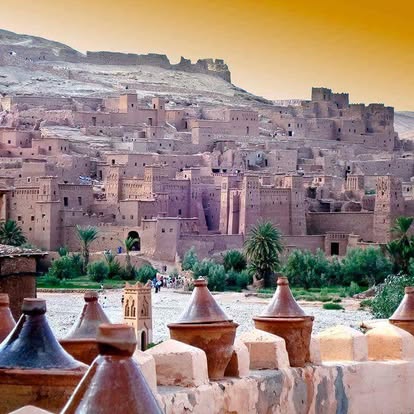
Tourism is one of Morocco’s most important industries, contributing approximately 7–8% of GDP directly and 15–18% indirectly through associated supply chains. Morocco received over 14 million international visitors in 2023, recovering to pre-COVID levels, and has set a target of 26 million visitors by 2030 under its Vision Tourisme 2030 strategy. The country benefits from its proximity to Europe (3 hours from Paris, 2 hours from Madrid) and the unparalleled diversity of its tourism offer.
- Major source markets: France, Spain, UK, Germany, Italy, the Netherlands, USA
- Key segments: cultural tourism, desert & adventure, beach resorts, business travel, film tourism
- Tourism infrastructure: 4,000+ hotels, 13 international airports, growing cruise sector
4. Aerospace & Defence Industry
One of Morocco’s most dynamic emerging sectors, the aerospace industry has grown from near-zero to a €1.5 billion export cluster in under two decades, with over 140 companies employing 16,000+ engineers and technicians in facilities around Casablanca and Nouaceur. Major global players including Safran, Airbus, Boeing, Stelia, and Daher have established manufacturing operations in Morocco, attracted by competitive labour costs, strong engineering universities, and the GIMAS cluster ecosystem.
5. Agriculture — Backbone of Rural Morocco
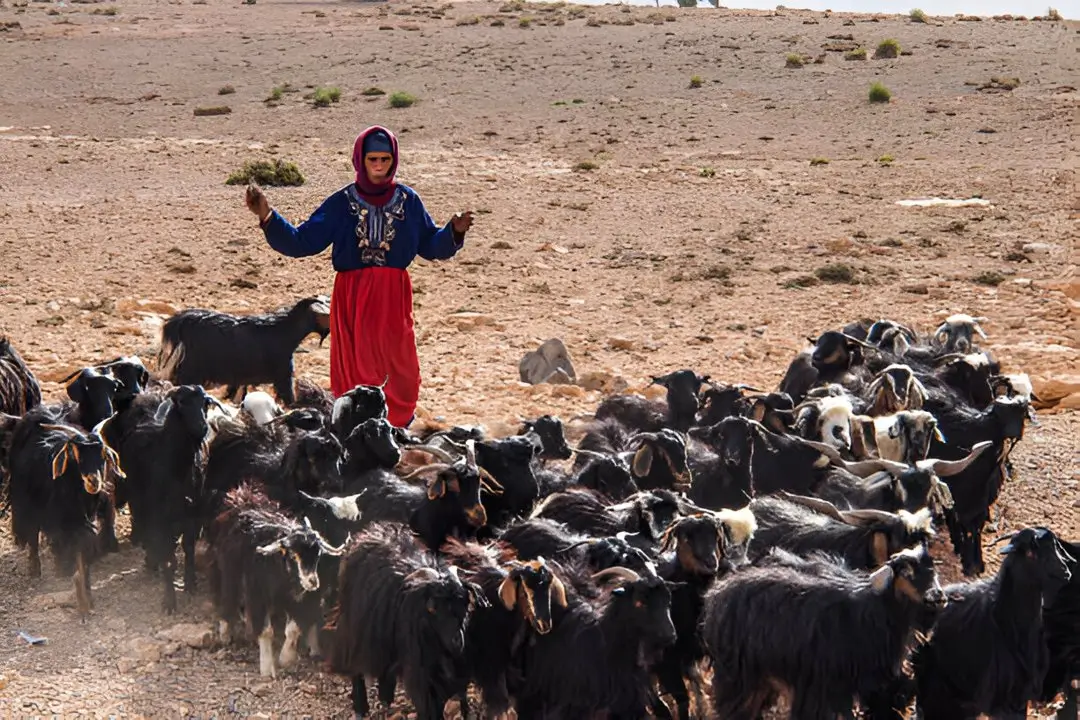
Agriculture employs approximately 40% of Morocco’s workforce and contributes 11–14% of GDP (rising to 20%+ in good rainfall years). Morocco is a significant exporter of citrus fruits, tomatoes, sardines, argan oil, olives, and vegetables to Europe. The Plan Maroc Vert (Green Morocco Plan, 2008–2020) and its successor Génération Green 2020–2030 have channelled over $10 billion into agricultural modernisation, irrigation, and rural development.
6. Renewable Energy — A Global Pioneer
Morocco has set one of the world’s most ambitious renewable energy targets — achieving 52% of installed electricity capacity from renewables by 2030. The Noor Ouarzazate Solar Complex is the world’s largest concentrated solar power (CSP) plant, and Morocco is developing massive offshore wind and green hydrogen projects. The country already exports electricity to Spain and Portugal and aims to become a major green hydrogen and green ammonia exporter to Europe by 2030.
The Noor Ouarzazate Solar Plant spans 3,000 hectares and produces enough electricity to power a city of one million people — making it the world’s largest single solar facility.
Morocco’s Key Economic Indicators (2023)
| GDP (Nominal) | ~$142 billion USD |
| GDP (PPP) | ~$330 billion Int’l dollars |
| GDP Growth Rate | ~3.4% (2023) |
| GDP per capita (nominal) | ~$3,800 USD |
| Inflation | ~6.1% (2023, easing from 2022 peak) |
| Unemployment | ~12.9% overall; ~30% youth unemployment |
| Trade balance | Deficit (~$20 billion); phosphates & automotive offset imports |
| FDI inflows | ~$2.4 billion (2022); rising trend |
| Public debt | ~72% of GDP (manageable by regional standards) |
| Main export partners | Spain, France, India, USA, Italy, Brazil |
| Main import partners | Spain, France, China, USA, Germany, Saudi Arabia |
Morocco’s New Development Model (2021–2035)
In 2021, King Mohammed VI unveiled Morocco’s New Development Model (Nouveau Modèle de Développement) — a comprehensive 15-year reform blueprint developed by an independent special commission and centred on four pillars: building a productive and diversified economy, developing human capital, ensuring sustainable territorial development, and strengthening institutions and governance.
The NMD targets achieving upper-middle-income country status by 2035 through a combination of industrial deepening, education reform, digital transformation, and social protection expansion. Key flagship projects include the 2030 FIFA World Cup co-hosting (with Spain and Portugal), the Atlantic Africa-Europe gas pipeline (with Nigeria), and the green hydrogen export strategy.