Morocco is one of the world’s great travel destinations — a country where a single two-week trip can take you from the labyrinthine medieval medinas of Fes and Marrakech to the silence of Saharan dunes, from blue-washed mountain villages to Atlantic surf towns, from Roman ruins to contemporary art museums. With 9 UNESCO World Heritage Sites, 3,500 km of coastline, the highest peaks in North Africa, and a hospitality culture of legendary warmth, Morocco delivers an intensity of experience that few destinations can match.
Morocco attracted over 14 million international visitors in 2023, making it Africa’s most visited country and the world’s 16th most visited destination.
1. Marrakech — The Red City
Marrakech (مراكش) is Morocco’s most visited city and one of Africa’s great metropolises — a sensory explosion of colour, sound, smell, and taste. The medina, a UNESCO World Heritage Site, is the largest car-free urban area in the world. Its heart is Jemaa el-Fna square, a living theatre that transforms from a morning market of orange-juice vendors and herbalists into a nightly carnival of storytellers, musicians, acrobats, and food stalls.
- Jemaa el-Fna Square — The pulsating heart of the medina; UNESCO Intangible Cultural Heritage
- Koutoubia Mosque — Marrakech’s 12th-century landmark; its minaret inspired the Giralda in Seville
- Bahia Palace — A 19th-century palace of 150 rooms and 8,000 m² of ornate tilework and gardens
- Majorelle Garden — A stunning 1.2-hectare botanical garden designed by Jacques Majorelle; now owned by the Yves Saint Laurent estate
- Saadian Tombs — Hidden royal necropolis, sealed for 200 years and rediscovered in 1917
- Ben Youssef Madrasa — A breathtaking 16th-century Islamic school; Morocco’s finest example of Marinid architecture
2. Fes el-Bali — The Medieval Capital
Fes (فاس) is Morocco’s spiritual and intellectual capital — a city that has been continuously inhabited since the 9th century AD and whose old medina (Fes el-Bali) is UNESCO-listed and contains the world’s oldest university, the University of al-Qarawiyyin, founded in 859 AD by Fatima al-Fihri. The Fes medina is also the world’s largest car-free urban area, with over 9,000 narrow lanes navigable only on foot or by donkey.
- Chouara Tanneries — Morocco’s most photographed sight: ancient leather dyeing pits still operated by hand
- Bou Inania Madrasa — The finest example of Marinid-era architecture; built 1350–1357
- Al-Qarawiyyin University & Mosque — World’s oldest continuously operating university (859 AD)
- Nejjarine Fountain & Museum — A beautifully restored caravanserai housing a museum of Moroccan woodworking
- Fes el-Jdid — The ‘New Fes’ (13th century) Jewish mellah and Royal Palace gates
3. The Sahara Desert — Erg Chebbi & Merzouga
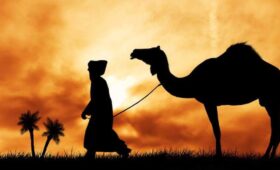
No journey through Morocco is complete without experiencing the Sahara. The most accessible and visually spectacular dune fields are the Erg Chebbi dunes near the village of Merzouga in southeastern Morocco, close to the Algerian border. The dunes rise up to 150 metres high and glow amber, copper, and deep red as the sun moves across the sky. Overnight camel treks into the desert, sleeping in luxury or traditional Berber camps under the stars, are among the most transformative travel experiences in Africa.
- Merzouga — Base camp for Sahara experiences; camel treks, 4WD excursions, sandboarding
- Erg Chebbi — 22 km long dune sea; dawn and dusk photography; stargazing (minimal light pollution)
- Rissani — Nearby historic ksar (fortified town) and gateway to the Tafilalt palm oasis
- Draa Valley — The route from Ouarzazate to Zagora follows Morocco’s longest river through ancient kasbahs
4. Chefchaouen — The Blue Pearl
Chefchaouen (شفشاون) is perhaps Morocco’s most photographed city — a small mountain town in the Rif Mountains whose medina is famously painted in dozens of shades of blue. Founded in 1471 as a refuge for Moorish and Jewish refugees from the Reconquista, Chefchaouen remained virtually unknown to outsiders until the 20th century. Today it is a must-visit destination that rewards slower exploration: climbing the hillside to the Spanish mosque for panoramic views, losing yourself in the blue alleyways, sampling local goat cheese, and buying handwoven textiles in the Place Outa el-Hammam.
The blue colour of Chefchaouen’s walls is attributed to both the historic Jewish tradition of painting homes blue to represent heaven, and the practical benefit of repelling mosquitoes.
5. Essaouira — The Atlantic Wind City
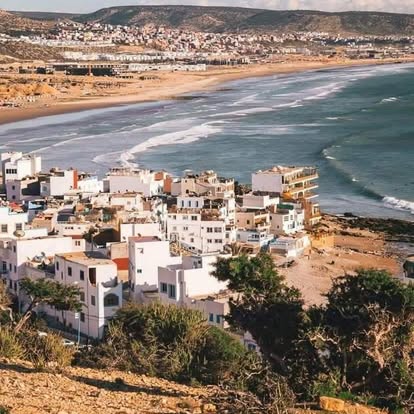
Essaouira (الصويرة) is Morocco’s most relaxed and cosmopolitan coastal town — a UNESCO-listed fortified port where Berber, Arab, Jewish, Portuguese, and French influences meet in a whitewashed maze of blue doors, ramparts, and wind-sculpted beaches. The city is renowned for its gnawa music tradition, its thriving contemporary art scene, its argan oil cooperatives, and as one of Africa’s premier destinations for windsurfing and kitesurfing (the trade winds blow almost year-round at 25–35 knots).
6. The Atlas Mountains
The High Atlas range runs diagonally across Morocco for over 1,000 km from the Atlantic coast to the Algerian border, including North Africa’s highest peak — Jebel Toubkal (4,167 m). The Atlas is a world-class trekking destination, offering everything from day hikes through Berber villages of terracotta mud-brick to 5–10 day summit expeditions on Toubkal. The Ourika Valley, just 35 km from Marrakech, provides an easily accessible introduction to mountain landscapes with Berber villages, waterfalls, and traditional markets.
7. Ait Benhaddou — Hollywood’s Morocco
Ait Benhaddou (آيت بنحدو) is a UNESCO World Heritage Site ksar (fortified Berber village) rising above the Ounila River on the ancient caravan route between the Sahara and Marrakech. Its towering pisé (rammed earth) towers and kasbahs have served as the backdrop for more than 20 major film and TV productions, including Lawrence of Arabia, Gladiator, Game of Thrones (as Yunkai), and The Mummy.
8. Tangier — Africa’s Gateway to Europe
Tangier (طنجة) has been reimagined in the past decade from its reputation as a gritty transit city into a genuine cultural destination. The newly developed waterfront, the Kasbah Museum with panoramic views of the Strait of Gibraltar, the vibrant café culture of the Petit Socco, and the nearby caves of Hercules (a geological formation where the Atlantic meets the Mediterranean in sea caves) make Tangier a compelling 2–3 day stop on any Morocco itinerary.
Best Time to Visit Morocco
| March – May | Best overall: warm, green landscapes, roses blooming in the Dades Valley |
| June – August | Hot (35–45°C inland); ideal for coast & mountains; summer festivals |
| September – Nov | Excellent: comfortable temperatures, lighter crowds, date harvest season |
| December – Feb | Cool to cold; good for cities; Sahara is crisp and beautiful; skiing in Atlas |