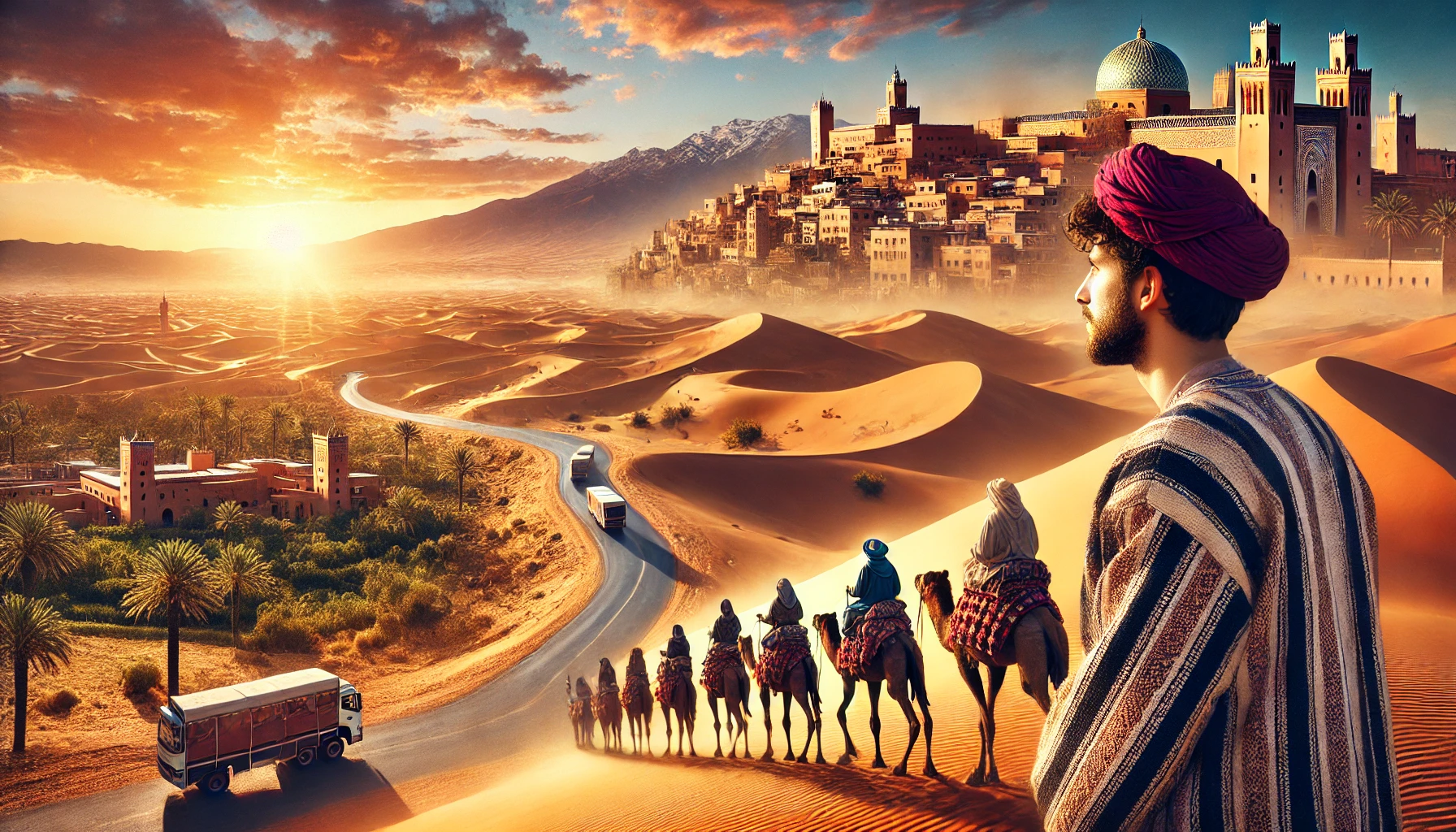
The 3 days desert tour from Marrakech is Morocco’s most iconic multi-day journey. It takes you from the vibrant streets of Marrakech, over the dramatic High Atlas Mountains, through a string of ancient kasbahs and sun-carved gorges, and finally delivers you to the golden sand dunes of Erg Chebbi — the real Sahara Desert. Over three days and two nights you will cross the highest paved road pass in North Africa, stand inside a UNESCO World Heritage Site that has appeared in dozens of Hollywood films, walk through a canyon with 300-metre walls, ride a camel at sunset into the most photographed dunes on the continent, sleep under a sky so thick with stars you will question whether you are still on Earth, and wake to a Sahara sunrise that travellers consistently describe as the single most breathtaking moment of their lives.
What is the 3 Days Desert Tour From Marrakech?
The 3-day desert tour from Marrakech is a guided multi-day excursion of Morocco desert tours that departs from Marrakech and travels south and east through Morocco’s most spectacular landscapes to reach Merzouga, the gateway village to the Erg Chebbi sand dunes on the edge of the Sahara. The tour covers approximately 560 km (350 miles) each way and involves roughly 20 hours of total driving spread across three days — but the journey itself is as rewarding as the destination, passing through the High Atlas Mountains, the Valley of the Roses, the Road of 1,000 Kasbahs, Berber villages, palm oases, ancient trading forts, and two of Morocco’s most dramatic gorges.
Tours are available in two main formats — shared group and private — and two accommodation tiers — standard and luxury desert camp. The experience is suitable for most travellers including families with children, couples, solo adventurers, and older travellers seeking a managed but immersive desert experience.
Where Does the 3-Day Tour From Marrakech Go?
The full route in order is: Marrakech departure at approximately 7–8 AM on Day 1, heading southeast via the Tizi n’Tichka mountain pass (2,260 m), then dropping into the pre-Saharan plains to visit Kasbah Ait Ben Haddou (UNESCO), continuing through Ouarzazate (the Hollywood of Africa), east along the Road of 1,000 Kasbahs to overnight in the Dades Valley. Day 2 continues to Tinghir and the Todra Gorge, then south to Merzouga where the camel trek begins at sunset into the Erg Chebbi dunes, with overnight in a traditional Berber desert camp. Day 3 begins before dawn for the Sahara sunrise, then returns to Marrakech via the Draa Valley, arriving approximately 6–8 PM. For information about Morocco Itineraries.
How Long is the Drive From Marrakech to Merzouga?
The drive from Marrakech to Merzouga is approximately 560 km (350 miles) and takes 8–9 hours of pure driving. On Day 1 of the tour this leg is broken up into a roughly 6-hour drive with multiple sightseeing stops at the Tizi n’Tichka pass viewpoints, Ait Ben Haddou, and Ouarzazate, so the journey feels manageable. Day 2 covers the remaining 4–5 hours from Dades Valley to Merzouga with a stop at Todra Gorge. The return journey on Day 3 is the longest driving day — approximately 8–9 hours — broken by rest stops every 2 hours and a lunch stop in Ouarzazate.
Pro Tip: If you suffer from motion sickness, bring medication. The Tizi n’Tichka pass involves long stretches of winding mountain road. Ginger chews and a window seat also help.
Is the 3-Day Desert Tour From Marrakech Worth It?
Consistently, yes. The 3-day desert tour from Marrakech ranks as one of the top travel experiences in Africa. With over 11,000 reviews on Viator alone and thousands more across GetYourGuide and TripAdvisor, the tour scores between 4.5 and 5 stars across all major platforms. Travellers cite the diversity of the experience — from mountain passes to UNESCO kasbahs to gorges to the open Sahara — as exceptional value given the price point, which starts at approximately EUR 95 per person for a shared tour.
The key is choosing the right tour format and operator. Read reviews thoroughly, confirm the route includes Merzouga (not Zagora), and consider upgrading to a private tour or luxury camp if budget allows — the improvement in experience is substantial.
Full Itinerary: 3 Days Desert Tour From Marrakech
Day 1: Marrakech to Dades Valley (via Ait Ben Haddou and Ouarzazate)
Your guide or driver collects you from your hotel or riad in Marrakech between 7:00 and 8:00 AM. The first hour of driving takes you through the fertile Haouz Plain before the road begins to climb into the High Atlas Mountains. The landscape shifts dramatically from terracotta-coloured plains to steep valleys lined with argan trees, followed by increasingly rugged mountain scenery as you gain altitude.
The Tizi n’Tichka pass, at 2,260 metres above sea level, is the highest paved road pass in North Africa. Your driver will stop at key viewpoints where the panorama across the Atlas Mountains — sometimes snow-capped from October to April — is extraordinary. Small Berber roadside stalls sell fossils, minerals, and local produce; these are legitimate and worth a brief browse.
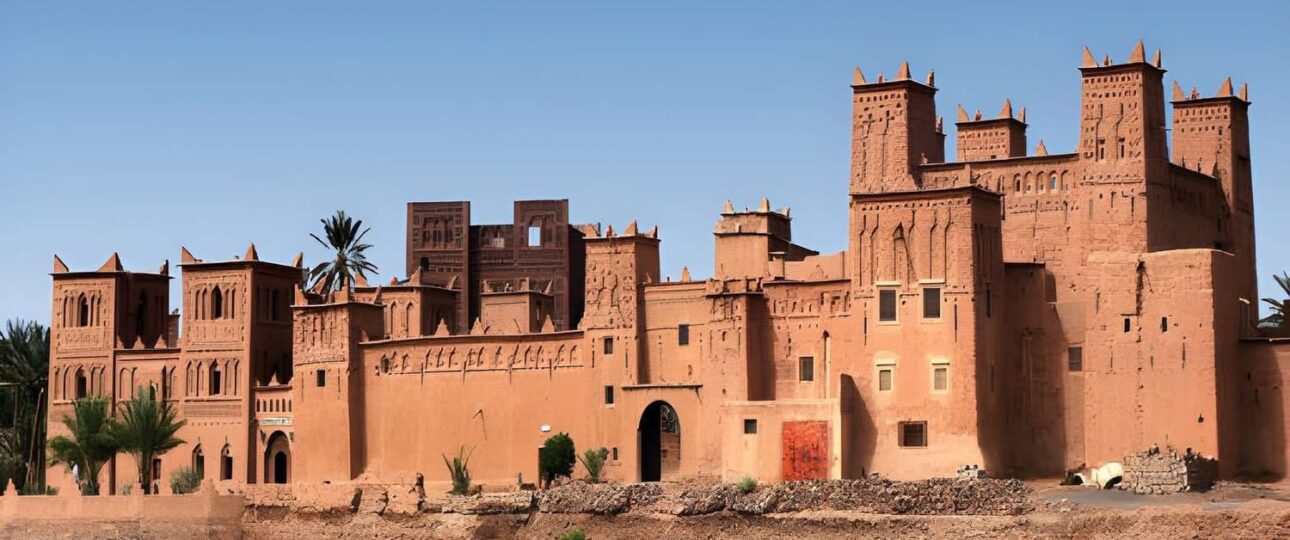
Descending from the pass, the landscape transforms again into arid, ochre-coloured pre-Saharan plains dotted with fortified villages called ksars. Ait Ben Haddou appears on a hillside like something from a dream — a cluster of towering mud-brick towers rising above the Ounila River. Your driver stops here for 1.5 to 2 hours, including a guided walk through the kasbah and lunch at a local restaurant in the village. Most lunches are tagine — slow-cooked in a clay pot — and are excellent value.
After Ait Ben Haddou, a 30-minute drive brings you to Ouarzazate — the self-styled Hollywood of Africa. Depending on time and your tour type, you may stop at Atlas Film Studios (the largest film studio in the world by area), visit Kasbah Taourirt, or simply drive through the city for a brief coffee stop before continuing east along the Road of 1,000 Kasbahs. Arrival at your Dades Valley hotel is typically between 5:30 and 7:00 PM. Dinner and breakfast are included.
| Day 1 Key Facts: Departure: 7–8 AM from Marrakech Total driving: approx. 6 hours (with stops) Main stops: Tizi n’Tichka, Ait Ben Haddou (UNESCO), Ouarzazate Overnight: Hotel/guesthouse in Dades Valley (dinner and breakfast included) Distance covered: approx. 330 km |
Day 2: Dades Valley to Merzouga (via Todra Gorge)
After breakfast, Day 2 begins with a short but spectacular diversion to Todra Gorge, approximately 45 minutes from most Dades Valley hotels. The gorge is reached by driving east through Tinghir, a large oasis town surrounded by the most extensive palm grove in the southern Atlas region. A 20-minute walk along the riverbank inside the gorge brings you face-to-face with walls that rise 300 metres on either side, narrowing to as little as 10 metres at the tightest point. The light changes dramatically depending on the time of day — early morning produces the most striking effects as sunlight cuts into the canyon floor.
From Tinghir, the road south enters increasingly arid territory as you pass through the towns of Tinjdad and Erfoud — known for its fossil industry, where local craftsmen cut and polish ammonites and trilobites embedded in the ancient limestone. The landscape becomes flatter and more lunar, the vegetation progressively sparser, until suddenly — usually in the late afternoon — the first dunes of Erg Chebbi appear on the horizon. For most travellers this is the most emotional moment of the entire journey: after hours of driving through stone desert and flat plains, a wave of golden sand 150 metres high rises from the earth like a mirage that turns out to be real.
At the edge of the dunes, your camel caravan is waiting. The sunset camel trek into Erg Chebbi lasts approximately one hour and delivers you to your Berber desert camp as the sky turns through shades of orange, pink, and deep violet. Dinner is a traditional Moroccan spread — harira soup, salads, tagine or couscous — eaten in an open-sided tent. After dinner, Berber musicians perform on hand drums around the campfire while above you, with no light pollution for hundreds of kilometres, the Milky Way is fully visible to the naked eye.
| Day 2 Key Facts: Departure: 8:00 AM from Dades Valley Total driving: approx. 4–5 hours (with stops) Main stops: Todra Gorge, Tinghir oasis, Erfoud Highlight: Sunset camel trek into Erg Chebbi Overnight: Berber desert camp (dinner and breakfast included) Distance covered: approx. 230 km |
Day 3: Sahara Sunrise and Return to Marrakech
Your camp guide wakes you at approximately 5:15–5:30 AM for the sunrise — and this is non-negotiable. The Sahara sunrise at Erg Chebbi is the single moment that travellers most frequently describe as the highlight of their entire Morocco trip. The sun rises over the Algerian mountains to the east and paints the dunes from pale gold to deep amber to vivid orange in the space of fifteen minutes. The silence is total. No wind, no traffic, no noise — only the soft sounds of the desert waking up.
After the sunrise, you either ride your camel back to the edge of the dunes (approximately 45 minutes) or transfer by 4×4 vehicle if you prefer. Breakfast is served at the camp or at a nearby hotel where shower facilities are available — note that standard camps typically do not have showers, whereas luxury camps do. After breakfast and freshening up, the long return drive to Marrakech begins.
The return route passes through the Draa Valley — Morocco’s longest river oasis, a corridor of palm trees, kasbahs, and fortified granaries (agadirs) stretching north from the Sahara. Stops are made approximately every two hours for coffee, photos, and leg stretching. A lunch stop is made in Ouarzazate or on the road. The return drive through the High Atlas from the south side offers a completely different perspective on the mountain landscape. Arrival in Marrakech is typically between 6:00 and 8:00 PM, with drop-off at your hotel or riad.
| Day 3 Key Facts: Wake-up: 5:15–5:30 AM for sunrise Departure from Merzouga: approx. 8:30–9:00 AM Total driving: approx. 8–9 hours Return route: via Draa Valley, Ouarzazate, Atlas Mountains Arrival in Marrakech: 6:00–8:00 PM |
Key Stops on the 3-Day Desert Tour
What is Ait Ben Haddou?
Ait Ben Haddou is a UNESCO World Heritage Site located 32 km northwest of Ouarzazate. It is a ksar — a type of fortified Berber village built from pisé (rammed earth and straw) — that has been continuously inhabited for over 1,000 years. The site sits on a hillside above the Ounila River and comprises six distinct kasbahs (tower houses), a grain store, a mosque, and a network of alleyways, all enclosed within a single defensive wall. It was inscribed on the UNESCO World Heritage List in 1987 as an outstanding example of earthen architecture in the pre-Saharan region.
Ait Ben Haddou is also one of the world’s most filmed locations. Major productions shot here include Gladiator (2000), Game of Thrones (scenes of Yunkai), The Mummy (1999), Lawrence of Arabia, Babel, Jewel of the Nile, and Ridley Scott’s Kingdom of Heaven. The climb to the top of the kasbah takes approximately 20 minutes and rewards visitors with a sweeping view over the surrounding valley and plains.
What Films Were Shot at Ait Ben Haddou?
The full list of major productions filmed at Ait Ben Haddou includes: Gladiator (2000) — the Roman city of Zucchabar; Game of Thrones — the slave city of Yunkai in Season 3; The Mummy (1999); Lawrence of Arabia (1962); Babel (2006); Jewel of the Nile (1985); Kingdom of Heaven (2005); Hanna (2011); Prometheus (2012); and American Horror Story. Many visitors arrive with scenes in mind and spend time identifying specific walls and gateways featured in the films.
What is Ouarzazate?
Ouarzazate, pronounced ‘Wah-zah-zaht’, is the provincial capital of southern Morocco and the self-titled Hollywood of Africa. The city is home to Atlas Film Studios — with a total area of 322,000 square metres, it is the largest film studio complex in the world. Sets from major productions including Lawrence of Arabia, Gladiator, Babel, and many others are preserved and open to visitors. The city’s other key landmark is Kasbah Taourirt, a sprawling 19th-century palace complex built by the Glaoui clan that ruled southern Morocco before independence. Ouarzazate serves as the natural staging post between the Atlas Mountains and the desert south — it is where the road forks, the landscape opens, and the desert begins.
What is the Tizi n’Tichka Pass?
The Tizi n’Tichka pass, at 2,260 metres (7,415 feet) above sea level, is the highest paved road pass in North Africa. It crosses the High Atlas range between Marrakech and Ouarzazate via a succession of tight hairpin bends and dramatic cliff-edge roads. The views from the summit across the Atlas — and on clear days, south towards the beginning of the pre-Saharan plains — are exceptional. In winter (December to February) the pass is occasionally closed due to snow; tours plan around this and alternative routes are available. The journey over the pass takes approximately 2 hours from Marrakech.
What are the Dades Valley and Dades Gorge?
The Dades Valley, often called the Valley of a Thousand Kasbahs, stretches east from Ouarzazate along the Dades River, a long corridor of rose gardens, almond groves, and ancient fortified villages. The valley is famous for its rose cultivation — the Kelaa M’Gouna area hosts Morocco’s annual Rose Festival each May, when tonnes of rose petals are harvested for rosewater and argan products. The Dades Gorge, at the eastern end of the valley, is a dramatic limestone canyon carved by the Dades River, whose pinkish-red rock walls and distinctive erosion formations make it one of the most photogenic spots in southern Morocco. The overnight stop on Day 1 of the desert tour is typically in or near Boumalne Dades, positioned at the entrance to the gorge.
What is Todra Gorge?
Todra Gorge is a river canyon carved by the Todra River near the town of Tinghir, approximately 53 km east of the Dades Gorge. At its narrowest and most dramatic point, the gorge walls rise 300 metres on either side while the floor narrows to just 10 metres wide, with the Todra River still flowing through the base. The walls are rose-pink and amber in early morning light, shifting to deeper ochre and shadow as the day progresses. Todra Gorge is internationally famous among rock climbers — dozens of routes between 4a and 7c are established on the gorge walls. For non-climbers, a one-hour walk along the riverbank through the gorge interior is one of the most memorable experiences in southern Morocco.
What is Merzouga and Erg Chebbi?
Merzouga is a small village of approximately 3,000 inhabitants in the Errachidia Province of southeastern Morocco, situated at the foot of the Erg Chebbi dune field on the edge of the Sahara Desert. It sits at an elevation of 1,100 metres and is located approximately 50 km from the Algerian border. The village itself consists of small hotels, guesthouses, and camel hire operations — it exists almost entirely to serve desert tourism.
Erg Chebbi is the sand dune field that gives Merzouga its fame. The dunes reach up to 150 metres (490 feet) in height and extend for approximately 22 km north to south and 5 km east to west. The sand is a distinctive red-orange colour that changes shade dramatically with the light — pale gold at midday, deep copper at sunset, dark orange at sunrise. Erg Chebbi is classified as one of only two major ergs (sand seas) in Morocco, and is widely considered the finest and most photogenic sand dune experience accessible from Marrakech.
Activities Included in the 3-Day Desert Tour
Every standard 3-day desert tour from Marrakech includes the following activities as part of the package price:
- Camel trek at sunset from the edge of the Erg Chebbi dunes to your Berber desert camp (approximately 1 hour)
- Overnight stay in a traditional Berber desert camp with private tent
- Traditional Moroccan dinner served in the camp dining tent
- Live Berber music and drumming around the campfire
- Sahara Desert stargazing with zero light pollution
- Sahara sunrise from the dunes
- Guided walk at Ait Ben Haddou kasbah (UNESCO World Heritage Site)
- Walk through Todra Gorge along the riverbank
- Scenic drive over the Tizi n’Tichka mountain pass
- Stop at Ouarzazate (Atlas Film Studios viewpoint included on most tours)
What is the Camel Trek Experience Like?
The camel trek at Erg Chebbi is the centrepiece of the desert experience. You mount your camel at the edge of the dunes approximately 45–60 minutes before sunset and ride in a small caravan led by a Berber guide into the heart of Erg Chebbi. The ride lasts approximately one hour each way. Camels move at a slow, rolling pace and are stable for riders of most ages and fitness levels. The trek stops at various points for photography — the light on the dunes at this hour is extraordinary, producing long blue shadows that make the sand look almost three-dimensional.
For travellers who prefer not to ride camels — or who have back or joint conditions — nearly all private tour operators can arrange a 4×4 transfer to the camp instead. This must be requested at booking. On shared tours, the camel trek is generally mandatory unless a medical reason is given.
Pro Tip: Wear long trousers for the camel ride as the saddle rope can irritate bare skin. A light scarf or buff is essential to keep sand out of your face and hair.
What is a Berber Desert Camp Like?
Standard camps consist of a cluster of traditional Berber tents arranged around an open courtyard with a central firepit. Tents are furnished with proper beds, blankets (the desert is surprisingly cold at night even in summer), and basic lighting. Standard camps have shared bathroom and shower facilities located in a separate block — these are clean but basic. Luxury camps upgrade to private en-suite tents with a proper bathroom attached, higher-quality furnishings, and in summer months, air-conditioning; in winter, heating. The dining tent is shared in all camp types.
The evening at camp follows a loose but consistent structure: arrival and welcome with mint tea, time to climb a nearby dune for photos before darkness falls, dinner, Berber music and drumming around the campfire (typically lasting 1–2 hours), and then the camp quietens and the star show begins. The Milky Way is visible to the naked eye from October through April in particular, and the sight of 5,000+ stars above an ocean of dunes is something travellers consistently describe as the most moving moment of the tour.
Can You Go Sandboarding on the Desert Tour?
Yes — sandboarding is available at Erg Chebbi and is one of the most popular optional extras on the 3-day desert tour. Boards are available to hire from the camp or from operators at the base of the dunes, and the activity involves climbing to the top of a large dune and descending on the board — a mix of standing (for experienced users) and sitting (recommended for beginners). Sandboarding typically takes place in the hour before the camel trek begins and costs approximately EUR 10–20 to hire a board. It is not included in standard tour packages.
What is Stargazing Like at Erg Chebbi?
The Erg Chebbi stargazing experience is exceptional by any standard. The nearest significant light pollution source is several hundred kilometres away, and on clear nights — which are the majority at this low-humidity desert location — the naked-eye visible stars number in the thousands. The Milky Way core is clearly and dramatically visible from approximately August through October, when it sits highest in the sky. From December through February, the winter constellations including Orion, Taurus, and the Pleiades dominate. Some luxury camp operators offer guided stargazing sessions with telescopes. Even without optical aids, lying on a blanket in the sand and looking up is an experience of rare power.
Shared vs. Private Desert Tour: Which to Choose?
| SHARED TOUR | PRIVATE TOUR |
| Shared Tour | Private Tour |
| Minibus with up to 17 passengers | Own vehicle (4×4 or minivan) |
| Fixed departure schedule | Flexible departure time |
| Fixed itinerary, limited stops | Flexible stops and pace |
| Meet other travellers | Just your group |
| From EUR 95 per person | From EUR 150+ per person |
| Best for: solo travellers, budget travellers, social travellers | Best for: couples, families, photographers, those wanting flexibility |
The choice between shared and private tour comes down to budget and the kind of experience you want. Shared tours are well-organised and highly rated — the minibus format means you will spend two days alongside the same group of 6–16 other travellers, and many travellers report that this social element becomes an unexpected highlight of the trip. Private tours offer complete flexibility: you stop when you want, stay as long as you want at each location, and the experience is tailored entirely to your group.
What is the Difference Between Standard and Luxury Desert Camps?
The standard camp tier offers comfortable tents with proper beds, warm blankets, shared bathroom and shower block, included dinner and breakfast, and the full cultural experience of Berber music and stargazing. For most travellers this is entirely sufficient and the experience is rated highly. The luxury camp tier adds: private en-suite bathroom in your tent, higher-quality furnishings, seasonal air-conditioning or heating, upgraded meals, and often a more exclusive setting with fewer tents. The price premium over standard is typically EUR 30–60 per person. For couples on a romantic trip or travellers with specific comfort requirements, the luxury upgrade is worth it. For budget travellers and those primarily seeking the cultural and landscape experience, the standard camp delivers everything that matters.
Can the Tour Start from Ouarzazate Instead of Marrakech?
Yes — most operators allow you to join the 3-day desert tour in Ouarzazate rather than Marrakech. This option saves approximately 4 hours of driving on Day 1 and is well suited to travellers who are already in southern Morocco, who have visited Ait Ben Haddou independently, or who wish to avoid the longest stretches of mountain driving. The itinerary from Day 1 afternoon onwards is identical to the standard Marrakech departure. Meeting point logistics are arranged directly with the operator, typically at a central Ouarzazate hotel or the Atlas Film Studios car park.
How Much Does the 3-Day Desert Tour From Marrakech Cost?
| TOUR TYPE | PRICE PER PERSON |
| Shared Standard | From EUR 95/person |
| Shared Luxury | From EUR 130/person |
| Private Standard | From EUR 150/person |
| Private Luxury | From EUR 250+/person |
Prices vary between operators and rise significantly during peak season (March–May and September–November). The above are baseline prices for advance bookings. Last-minute bookings in Marrakech’s medina are often cheaper but quality is more variable. The very cheapest tours (under EUR 80) frequently cut corners on accommodation quality or group size. A budget of EUR 100–130 per person for a shared standard tour, or EUR 180–220 for a private standard tour, generally buys a well-reviewed, high-quality experience.
What is Included in the Tour Price?
Standard inclusions across all reputable operators:
- Air-conditioned transport throughout (private or shared minibus/4×4)
- English-speaking driver-guide
- Hotel accommodation on Night 1 (Dades Valley area), with private room and bathroom
- Berber desert camp on Night 2 (standard or luxury, depending on booking tier)
- Breakfasts on Days 2 and 3
- Dinners on Nights 1 and 2
- Sunset camel trek into Erg Chebbi dunes
- Return 4×4 or camel from the camp on the morning of Day 3
- Hotel pickup and drop-off in Marrakech
Standard exclusions: lunches on all three days (budget EUR 8–15 per person per lunch); optional local guide at Ait Ben Haddou (EUR 3–5); sandboarding; optional quad biking; tips for guides and drivers (EUR 5–10 per day per person is customary); personal expenses; travel insurance.
How to Book the 3-Day Desert Tour From Marrakech?
There are three reliable booking routes. First, book online in advance through GetYourGuide, Viator, or TripAdvisor Experiences — all three platforms offer verified reviews, secure payment, and generally free cancellation up to 24–48 hours before departure. This is the recommended approach for travellers who want certainty and are visiting during peak season. Second, book directly with a tour operator through their own website — many excellent operators run direct booking systems with competitive prices and more flexibility for customisation. Third, book in person in Marrakech through your riad or hotel concierge or directly from operators based in the Jemaa el-Fna area — this can produce good last-minute deals but requires more due diligence on quality.
Pro Tip: Always confirm in writing which camp you will be staying at, whether dinner and breakfast are included, and what the exact itinerary is. Discrepancies between what is advertised and what is delivered are the main source of negative reviews.
What to Pack for the 3-Day Desert Tour From Marrakech?
Packing correctly makes an enormous difference to comfort on this tour, particularly given the dramatic temperature variation between the mountains (cool to cold), the desert midday (very hot), and the desert night (cold year-round).
- Small overnight backpack or daypack for the desert camp night (large luggage stays safely in the vehicle)
- Lightweight, breathable clothing for daytime — loose-fitting is best
- Warm fleece or jacket for mountain driving and desert nights (temperatures can drop to 5–10 degrees C even in summer)
- Closed shoes or trainers for walking at Ait Ben Haddou (steep, uneven terrain) and Todra Gorge
- Flip flops or sandals for the camp
- Sunscreen SPF 50+ — the desert sun is intense even in winter
- Sunglasses (wrap-around style recommended to keep sand out)
- Headscarf, buff, or lightweight scarf — for sand during the camel trek and modesty at religious sites
- Cash in EUR or MAD — many lunch stops and optional activity providers do not accept cards
- Toilet paper and hand sanitiser — rest stops along the route vary in facilities
- Reusable water bottle — stay hydrated throughout
- Personal medications — nearest pharmacies are in Ouarzazate and Tinghir
- Camera with a sand-proof bag or zip-lock bag for protection during the camel trek
What is the Best Time of Year for the 3-Day Desert Tour?
The 3-day desert tour from Marrakech runs year-round, but the experience varies considerably by season.
Spring (March to May) — Best Overall
Temperatures are ideal: 20–30 degrees C in the desert, 10–20 degrees C in the mountains. The landscape is at its most colourful — almond and cherry blossom in the Atlas, rose fields in full bloom in the Dades Valley during May. Visibility is excellent and the days are long. This is peak season and prices are highest; book well in advance.
Autumn (September to November) — Excellent
Temperatures have moderated after the summer heat, skies are clear, and the desert light in October is arguably the best of the year for photography. September can still be hot (35+ degrees C in the desert). November brings cooler nights. This is a popular season — advance booking recommended.
Summer (June to August) — Challenging but Possible
Daytime temperatures in the Sahara regularly exceed 40 degrees C in July and August. The experience is dramatically different and physically demanding. Luxury camps with air-conditioning become strongly recommended rather than optional. The advantage is that the dunes are usually less crowded and rates are at their annual low. Sunrise is particularly beautiful as the heat haze adds atmospheric layers to the dunes.
Winter (December to February) — Cold but Magical
Winter desert tours are underrated. Mountain road conditions are the main variable — the Tizi n’Tichka pass is occasionally snow-closed, though operators have alternative routes. Desert nights are very cold (approaching 0 degrees C in January). However, the winter sky is the clearest and most star-filled of the year, there are virtually no other tourists at the dunes, and the landscape has an austere beauty that summer visitors never see. Warm clothing is essential.
Pro Tip: Ramadan falls on different dates each year and can affect restaurant availability and service at some stops. Check the Ramadan calendar when planning. Most tourist services remain available but the atmosphere in towns is different.
How Long is the Drive Each Day?
Day 1: approximately 6 hours of driving including sightseeing stops (Marrakech to Dades Valley via Tizi n’Tichka, Ait Ben Haddou, Ouarzazate). Day 2: approximately 4–5 hours driving (Dades Valley to Merzouga via Todra Gorge). Day 3: approximately 8–9 hours driving (Merzouga back to Marrakech via Draa Valley). Rest stops are made every 1.5–2 hours on Day 3. The driving on Day 3 is the single most demanding element of the tour and is worth mentally preparing for. Most travellers find it passes reasonably quickly given the changing scenery and end-of-adventure reflective mood.
Do You Need to Speak French or Arabic?
No. All reputable 3-day desert tour operators provide English-speaking driver-guides as standard. French is widely understood as a second language across Morocco, and some guides also speak German, Spanish, or Italian. You do not need any language skills beyond English to complete the tour comfortably. That said, learning a few words of Darija (Moroccan Arabic) — such as shukran (thank you), labas (how are you), and bismillah (said before eating) — is always appreciated and often opens warm conversations with locals.
Is the 3-Day Desert Tour Suitable for Children?
Yes, generally, for children aged 5 and above. The main consideration is the long driving on Day 3 (8–9 hours), which can be difficult for young children. Packing entertainment — downloaded content, audiobooks, drawing materials — is essential for families with children under 10. The camel trek is manageable for most children and is typically a highlight for them. Desert temperatures, particularly in summer, require careful management: early starts, shade during midday, constant hydration, and high-factor sunscreen. Families consistently rate the tour highly and children are welcomed warmly by guides and camp staff.
Is the 3-Day Desert Tour Safe?
Yes. The 3-day desert tour from Marrakech is a well-established, heavily travelled route operated by licensed tour companies using modern, air-conditioned vehicles. Morocco is rated as one of the safer travel destinations in Africa and the Middle East for international tourists. The mountain roads on the Atlas crossing are the main physical variable — they are well-maintained but winding, and road conditions can deteriorate after heavy rain. Reputable operators use experienced drivers who know the route intimately. Travel insurance is strongly recommended as standard practice for any international trip. The Moroccan tourism police (brigade touristique) are present at all major tourist sites.
2-Day vs 3-Day Desert Tour: What is the Difference?
This is one of the most important distinctions for prospective travellers to understand. 2-day tours from Marrakech almost always go to Zagora — a destination in the Draa Valley that involves a stone desert (hamada), very small sand dunes, and a camel trek of only 1–2 hours. Zagora is a perfectly pleasant experience but it is emphatically not the Sahara Desert in the sense that most people imagine when they think of Morocco’s golden dunes. The iconic 150-metre orange dunes of Erg Chebbi are only reachable on a 3-day tour minimum. If you have only 2 days, Zagora is a reasonable compromise. If you have 3 days, always choose Merzouga and Erg Chebbi.
Pro Tip: A small number of operators advertise ‘2-day Sahara tours’ that go directly to Merzouga without stopping — these involve overnight driving and are not recommended. Always read the detailed itinerary and confirm you are going to Merzouga, not Zagora.
What is the Difference Between Merzouga and Zagora?
| MERZOUGA | ZAGORA |
| Merzouga (Erg Chebbi) | Zagora |
| 560 km from Marrakech | 360 km from Marrakech |
| 8–9 hours drive | 5–6 hours drive |
| Dunes up to 150 m high | Small dunes (20–30 m) |
| Classic Sahara red-orange sand | Stone desert with sand pockets |
| Minimum 3 days required | Reachable in 2 days |
| Stunning camel trek at sunset | Short camel trek (1–2 hours) |
| True Saharan experience | Desert experience, not full Sahara |
What is the Marrakech to Fes Desert Tour?
The Marrakech to Fes desert tour is an alternative routing of the 3-day desert experience that, instead of returning to Marrakech on Day 3, continues northward from Merzouga to Fes. The tour covers the same Day 1 and Day 2 itinerary (Ait Ben Haddou, Ouarzazate, Dades, Todra Gorge, Merzouga) but on Day 3 travels north through the Ziz Valley, the Middle Atlas, cedar forests, and the Ifrane region before arriving in Fes in the evening. This format is ideal for travellers making a circuit of Morocco who do not want to backtrack to Marrakech. It requires booking at both the Marrakech and Fes ends of the journey, or through an operator who offers the complete route. Search volume for this variant (4,400 monthly searches) confirms its popularity as an alternative to the standard return tour.